Mirrors, Illusions, and Mysticism – How Glass and Light Deceive the Brain
Published:
12.10.2026
Updated:
12.10.2026
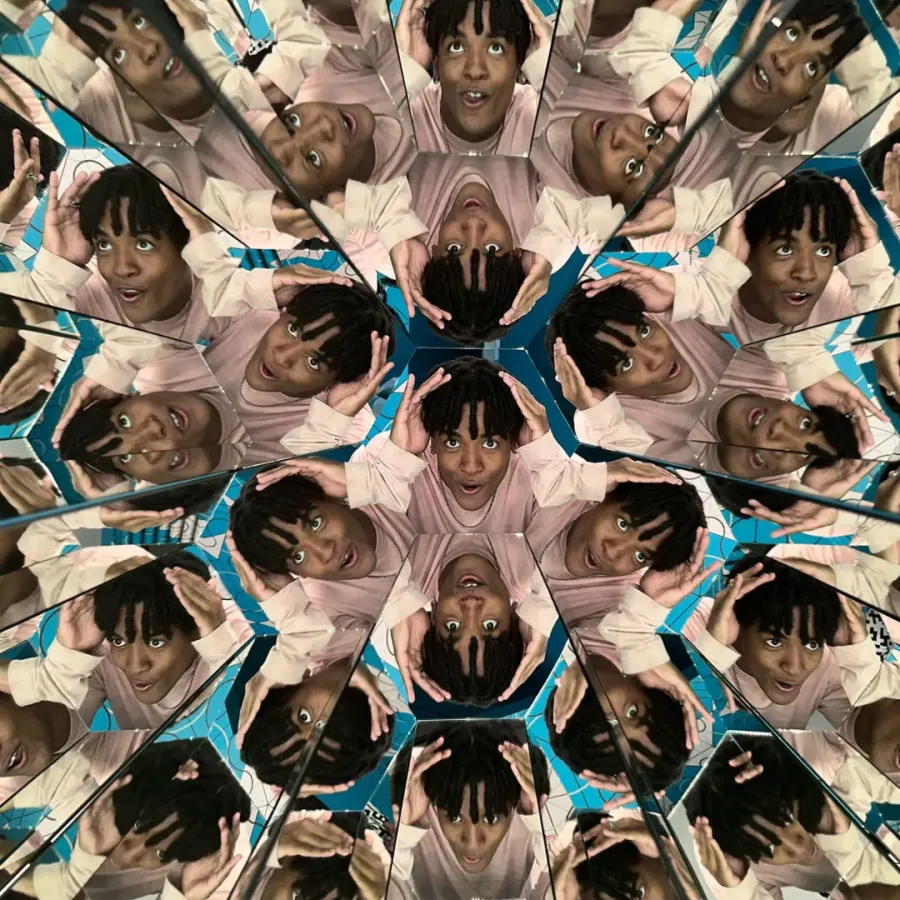
Why do our brains fall for mirror illusions time and time again? For centuries, mirrors have puzzled scientists, captivated theatre audiences, and challenged our perception of reality. In this article, we take a light dive into the fascinating intersection of glass, light, and the human mind.
During the dark autumn months, we tend to look at the world through a slightly more mystical lens. Jack-o’-lanterns, ghosts, skeletons, and creatures of the night become everyday decor as we step into the October festivities. Celebrated widely from the US to Europe, Halloween has become a popular tradition here in Finland for children and adults alike.
Spooky tales and scary stories are familiar territory in pop culture – whether through Buffy the Vampire Slayer, Scooby-Doo, or modern adaptations of Sherlock Holmes. In the latter two, ghosts and monsters almost always have a logical explanation, often involving masks and optical illusions.
Optical illusions have played a major role across science and the arts, from visual and performing arts to geometry and physics. While they rely on various clever techniques, this article focuses on a familiar object found in almost every home: the mirror.
The Mirror: A Window into Mysticism and Science
Mirrors stand at the crossroads of science and mysticism: manufacturing them requires mathematics, chemistry, and physics, while understanding their symbolic and psychological impact requires psychology, an understanding of symbolism, and knowledge of folklore and culture.
Physically, a mirror is a reflective surface that follows the laws of optics by forming a real or virtual image of an object. Early polished metal hand mirrors of antiquity and the Middle Ages gave way in the early 1500s to flat glass coated with metal alloys and full-length mirrors, with Venice serving as the long-time hub of production. Mirror development took another major leap in 1835 when Justus von Liebig invented a chemical process for coating glass with silver, turning what were once expensive luxury items into widely accessible everyday objects.
Mirrors and their reflections carry profound significance, for instance, in human psychological development and cultural beliefs. According to Jacques Lacan’s mirror stage theory, an infant recognises their own reflection in a mirror even before achieving full motor control. The joyful assumption of one’s specular image forms a symbolic matrix in which the I (or ego) precipitates in a primitive form. Large, full-length mirrors offered a new way to observe the body as a whole – an experience Lacan argued can also be alienating, as the reflection presents a unified external form that creates tension between a fragmented inner experience and an idealised self-image.
The mirror’s psychological depth and associated mysticism are tightly intertwined with folklore and superstition: people believed mirrors could trap a person’s soul or open portals to the afterlife and unseen dimensions. In this view, a mirror is not merely a reflective surface, but a magical threshold between the visible and invisible worlds.
This dual role, as both a physical surface and a magical gateway, has cemented the mirror’s place in the world of illusions, making it a pivotal tool, symbol, and prop in theatrical performances, even used to bring spirits onto the stage.
A Ghost Takes the Stage: How Does Pepper’s Ghost Work?
Pepper’s ghost is a 19th-century stage trick that uses the reflection from a sheet of glass to make a translucent, ghostly figure appear on stage. It remains one of the most famous illusions based on mirrors and reflections, and it was the first technique to convincingly bring translucent ghosts to the stage.
The principle behind Pepper’s ghost is simple: a sheet of glass, hidden from the audience’s view, is set at a specific angle between the audience and the stage. A brightly lit performer positioned off to the side reflects off the glass, seamlessly blending into the stage environment. Cultural and media historian Katharina Rein highlights this “large glass plate as the first theatrical effect” specifically as an archetypal mirror trick.
The technique is named after the English scientist John Henry Pepper, who introduced it to London audiences in the early 1860s – though the idea originated with inventor Henry Dircks, which is why the effect is sometimes referred to as the Dircks-Pepper illusion.
Such 19th-century visual innovations reflect a broader transition toward a newly defined subject of observation. As historian Jonathan Crary notes, the early 1800s saw a fundamental shift in how the observer was conceptualised across social practices and domains of knowledge, paving the way for modern visual culture.
Why Are Our Brains So Easily Tricked by Mirrors?
Mirror illusions work because our brains constantly make split-second assumptions and inferences based on sensory input from our eyes, relying on past experiences and our understanding of the world. Optical illusions exploit precisely this innate human tendency: they try to assemble fragmented visual information into a logical, coherent whole, even when a clever deception has been deliberately set before our eyes.
The delicate relationship between the human mind and the eye sparked immense scientific and cultural interest during the 19th century. Art historian Jonathan Crary notes that attention turned toward the concept of “subjective vision”, the understanding that vision and perception are not merely objective reflections of the world but can function autonomously, detached from their external objects.
Cultural and media historian Katharina Rein highlights a fascinating paradox: late 19th-century stage magic balanced precariously on the boundary between rationality and mysticism. Although magicians of the era loved to present themselves as engineers or inventors championing science and technology, their performances consciously leaned into mystery, the occult, and the enduring pull of old superstitions.
Yet, mirrors and optical tricks rely not only on mystical imagery, but also on precise mathematical and geometric order. In reflection, light rays obey the laws of physics: the angle of incidence always equals the angle of reflection. This geometric rule, combined with clever spatial design, lighting, and precisely positioned glass surfaces, makes misleading optical illusions possible – tricking even the most perceptive observer. Science and geometry provide the foundation for magical deception, proving that the line between reality and illusion can be a simple matter of perspective.
Enter the World of Mirrors – Discover Optical Illusions at Paradox Museum Helsinki
While you won’t find Pepper’s ghost at Paradox Museum Helsinki, the museum features plenty of other optical illusions for visitors to experience, with and without mirrors.
At Paradox Museum Helsinki, the guiding principle is simple: nothing is as it seems. Familiar physical laws and visual shortcuts are repeatedly put to the test. From mirror-induced infinity spaces and gravity-bending environments to mind-boggling optical tricks, Paradox Museum Helsinki provides hands-on discovery, eye-opening paradoxes, and new viewpoints for guests of every generation.
References:
- Cooper, Iver P. 2026. A Look into Mirrors – Their Making and Use Throughout History. McFarland and Company Inc. Publishers.
- Crary, Jonathan. 1990. Techniques of the Observer: On Vision and Modernity in the Nineteenth Century. Cambridge, Mass.: MIT Press.
- Encyclopædia Britannica. “Mirror optics.” Available at: https://www.britannica.com/technology/mirror-optics.
- Lacan, J. (2006). Écrits: The First Complete Edition in English (Trans. B. Fink, H. Fink, & R. Grigg). W. W. Norton & Company.
- Rein, Katharina. 2023. Techniques of Illusion: A Cultural and Media History of Stage Magic in the Late Nineteenth Century. London and New York: Routledge. DOI: 10.4324/9781003271086.